BACK
Planet Under Pressure - Designing Tools for Storytelling
Leveraging data to create interactive art installation for an immersive storytelling
Background
As of today, understanding data requires some level of 'data-literacy'. And when we are connecting data with topics like environmental or societal causes, it becomes difficult for the mass audience to visualise it. This project was an attempt at making data accessible and interactive so that people can connect better with the environmental issues.
Problem Statement
Whenever we talk of data we basically refer to graphs and charts. Now this works fine for a smaller audience but for a wider audience it is not accessible. Now, this combined with environmental factor like air pollution level or water pollution level is difficult to visualise through simple abstract charts. So the core problem statement here was:
How can we make data interactive and visual for everyone.
Target Users
The interactive art installation had a broad range of audience including:
Designers
Journalists
Professors
Students
Artists

The Creation Process
The creation of the art installation involved various steps from start to end. The steps comprised of:
Identification of Effecting Parameters
Data Curation
Art Creation
Data Mapping
Final Showcase
Identification of Effecting Parameters
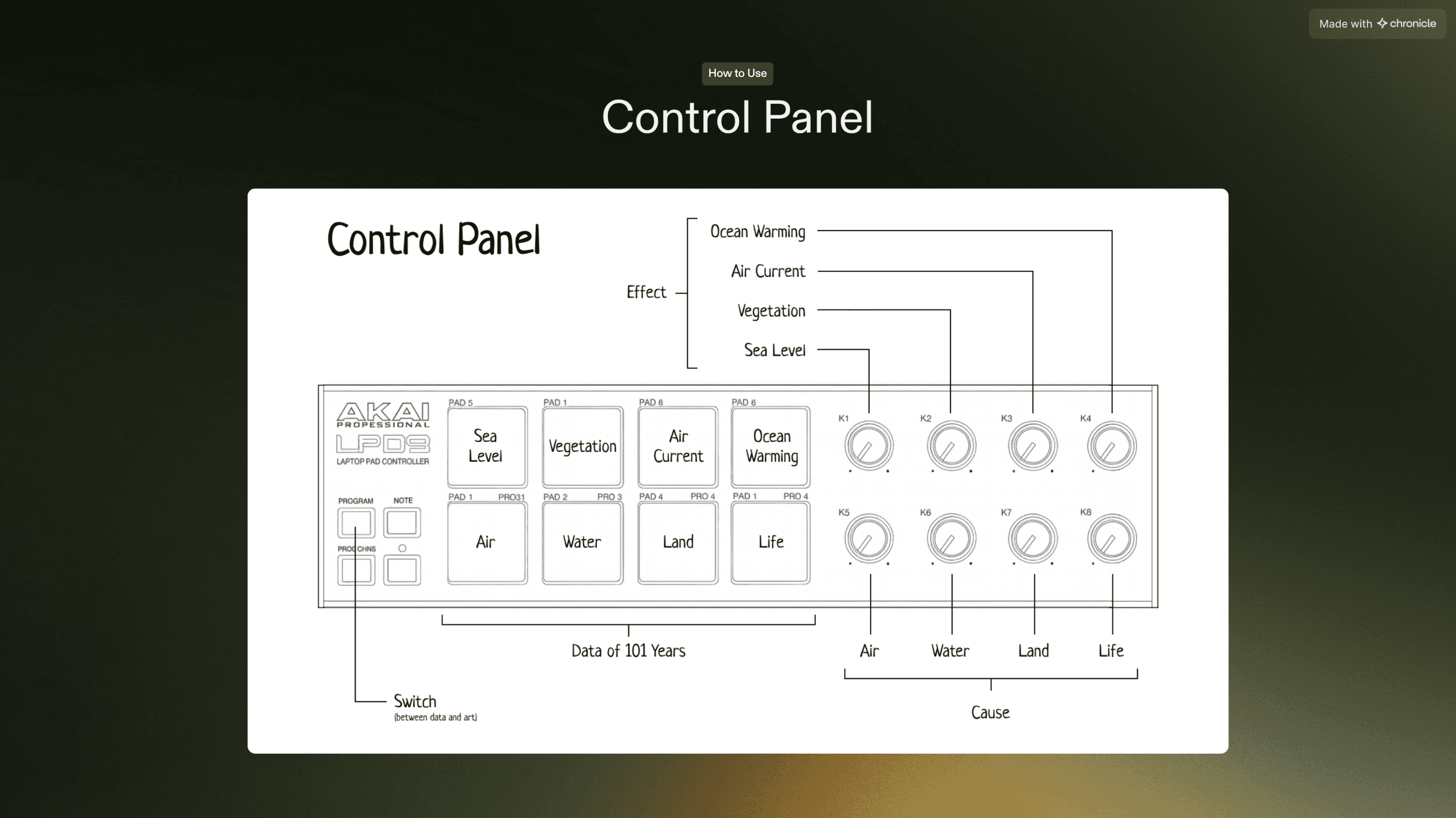
Various parameters were identified that effect the overall well being of the planet. Given that I was using a MIDI controller to make the installation interactive, I had a constraint of only using 8 parameters (since MIDI controller had 8 knobs). The 8 identified parameters were:
Air Quality Index
Water Quality Index
Sea Level Rise
Ocean Temperature Anomaly
Land Pollution Index
Jet Stream Fluctuation
Loss of Living Life
Vegetation Loss
Data Curation
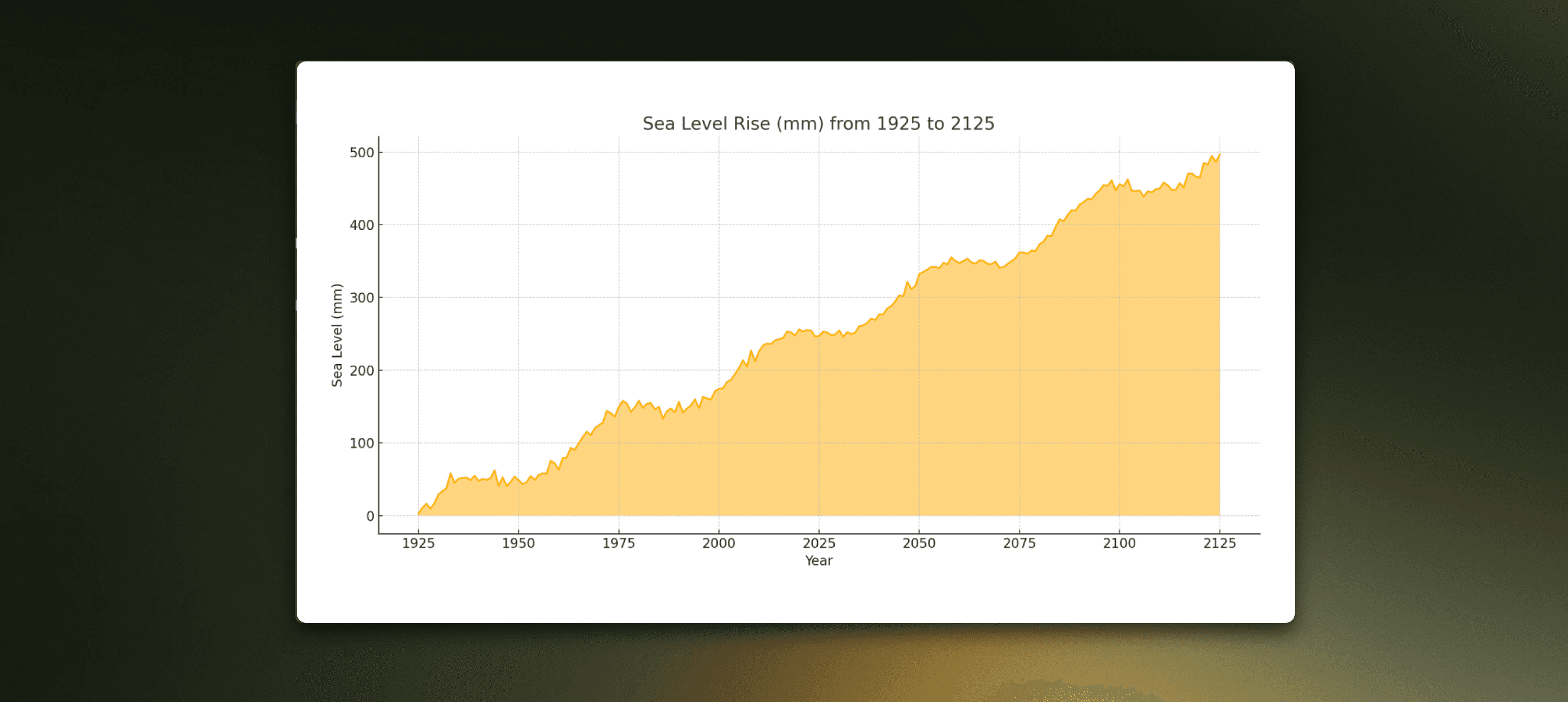
Based on the identified parameters, data for all the 8 parameters were extracted from multiple open-source available data sources. Since the installation planned on showing how parameters effected the planet in a long term so based on the extracted data of last 100 years, a predictive data set was built for the next 100 years. So we had an overall data trend for 201 years.
Art Creation
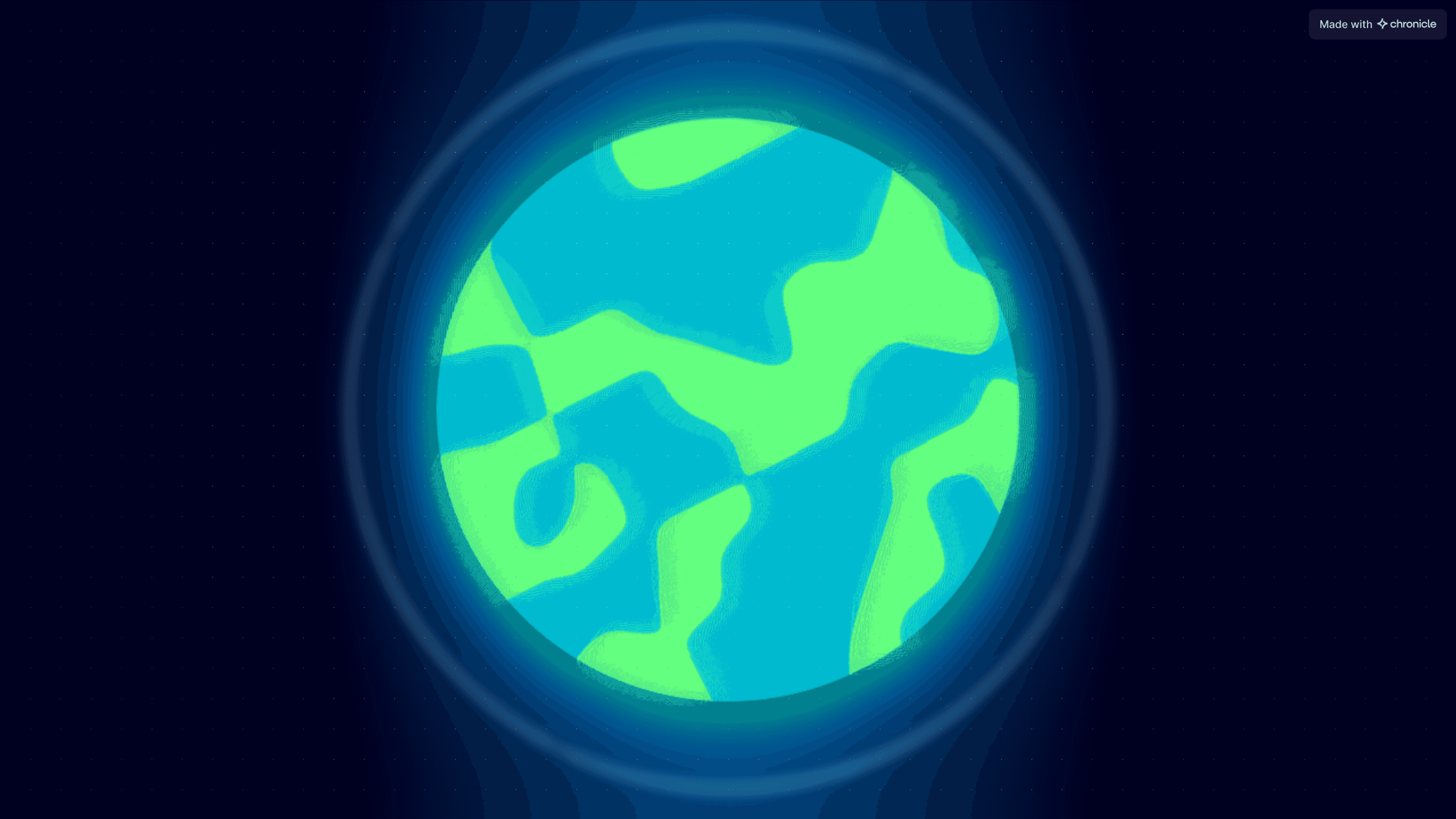
With some research and mood-boarding, I identified how the planet might look under various circumstances. For example:
Loss of vegetation would lead to making the planet look less green
Rise in sea level would lead to lesser soil are and more water area
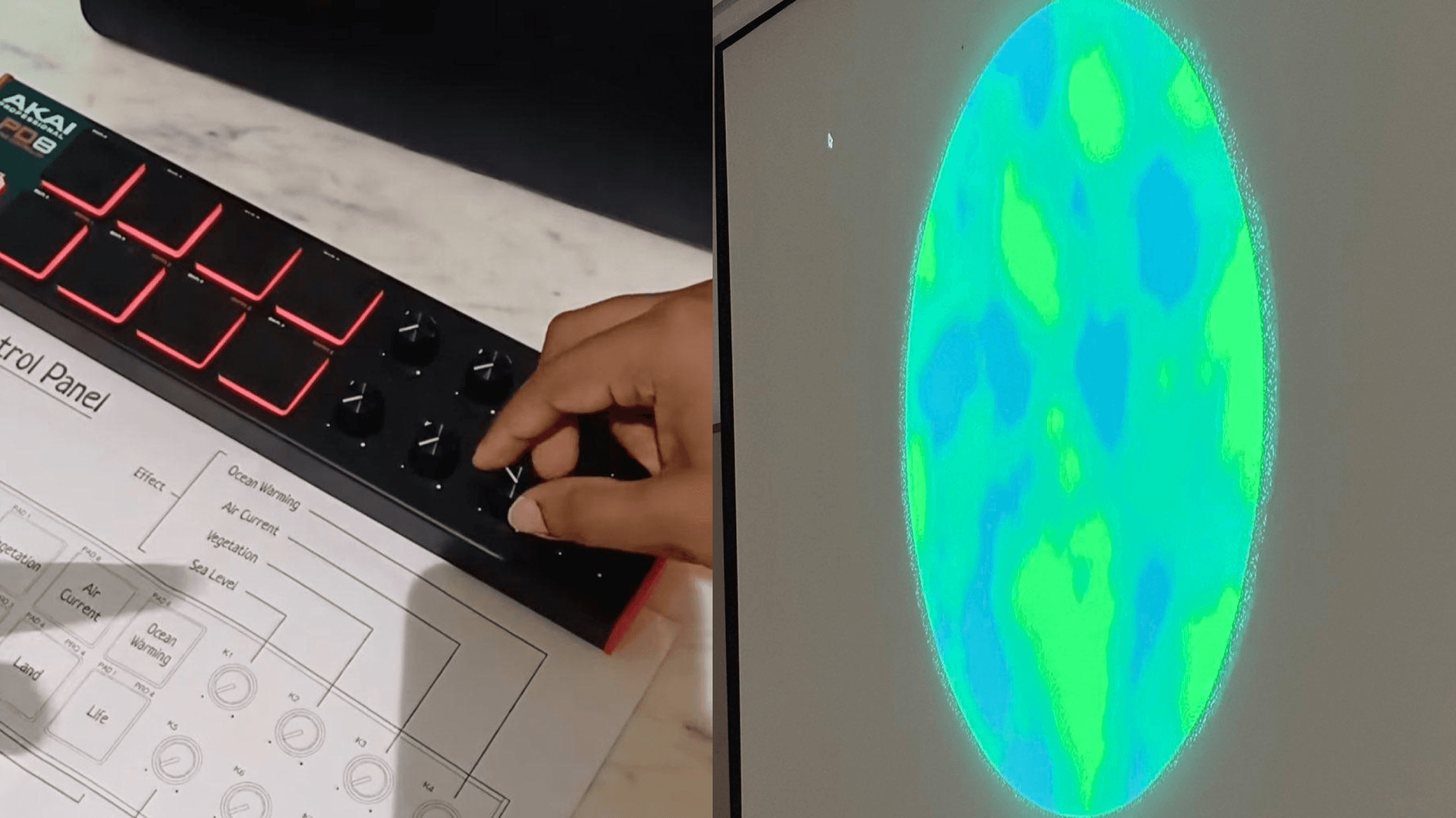
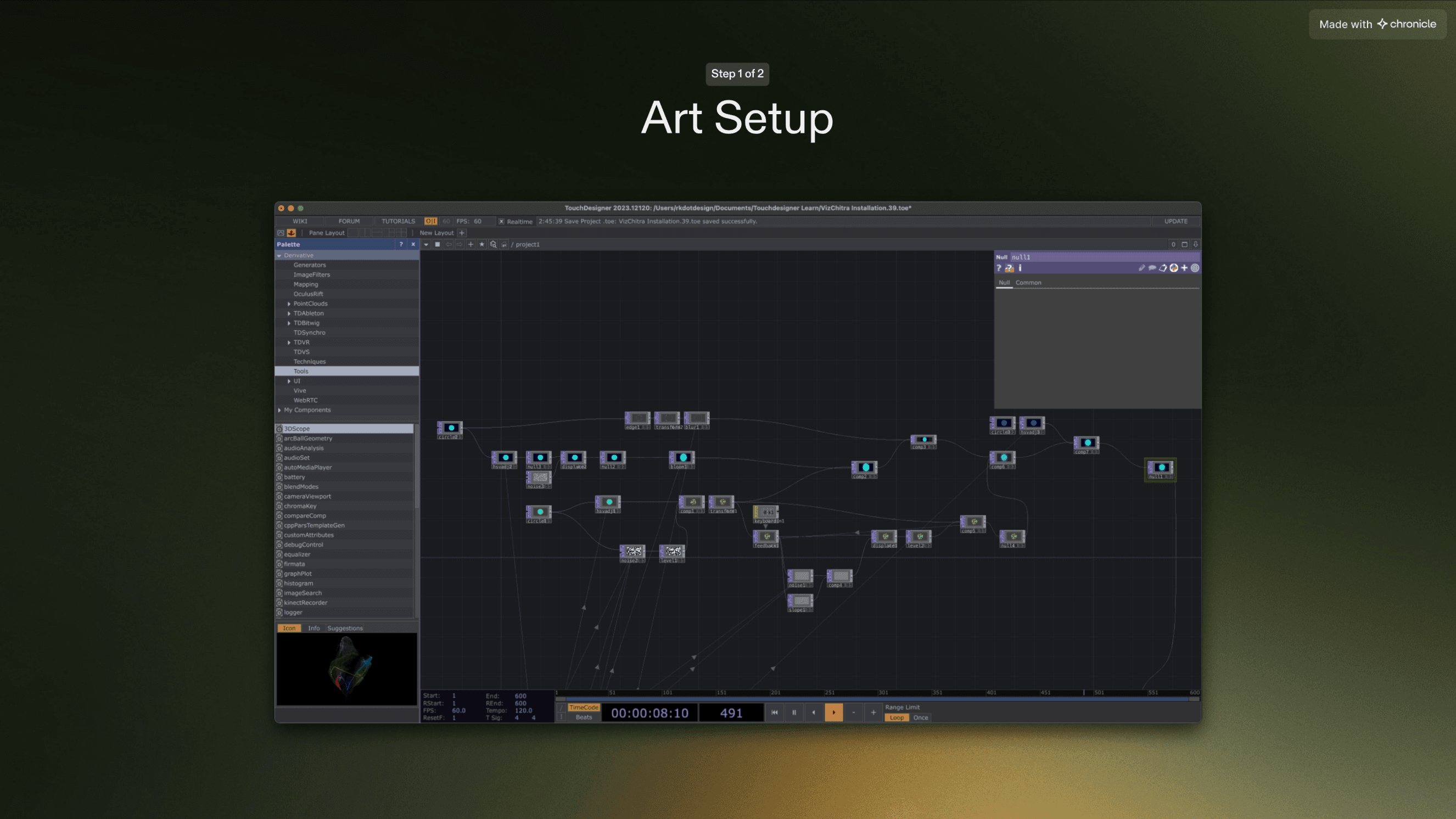
Taking all of these references into account, I created the basic art setup in Touchdesigner. Here, values of multiple functions in Touchdesigner were kept configurable to make the art interactive.
Data Mapping
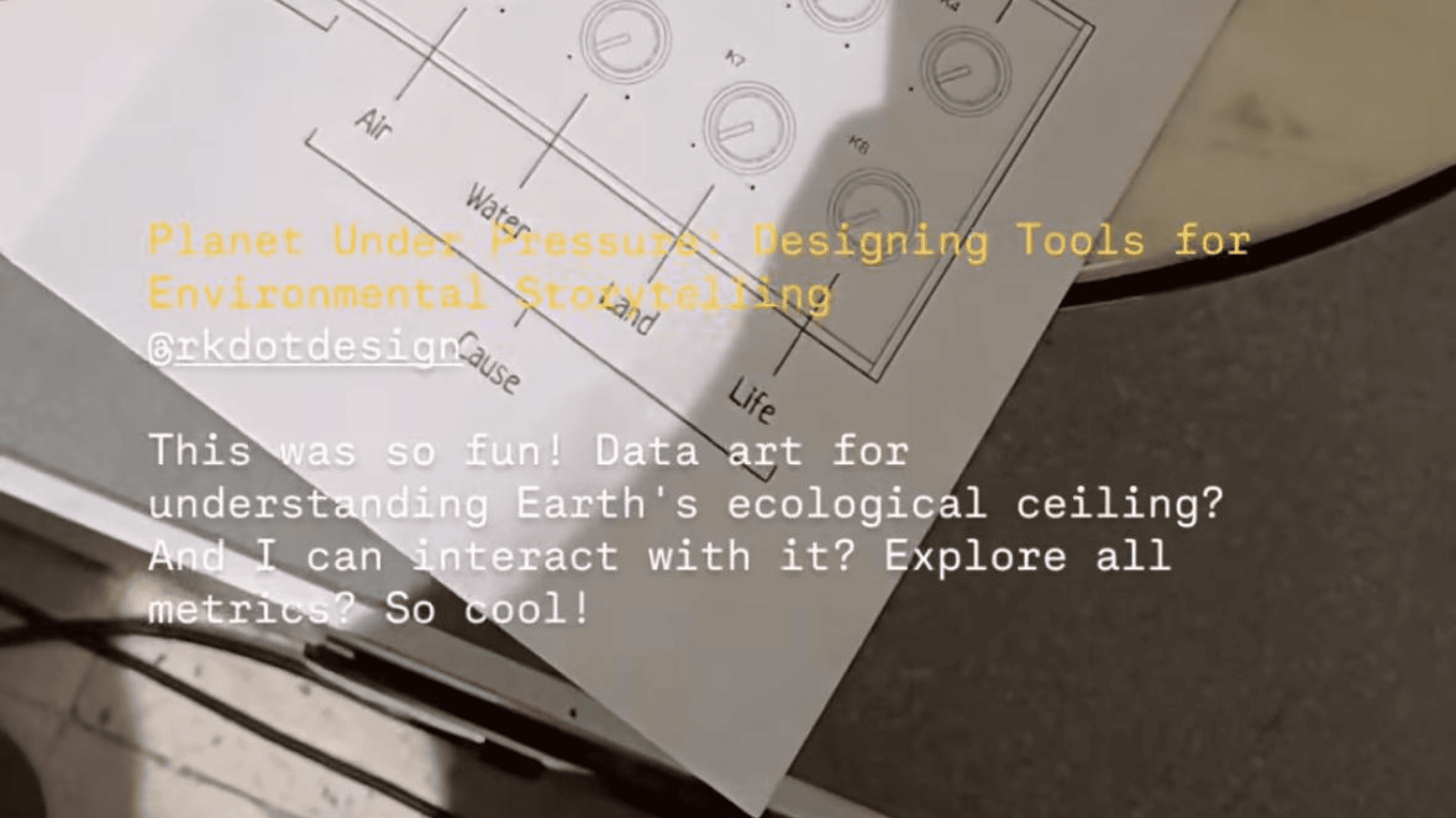
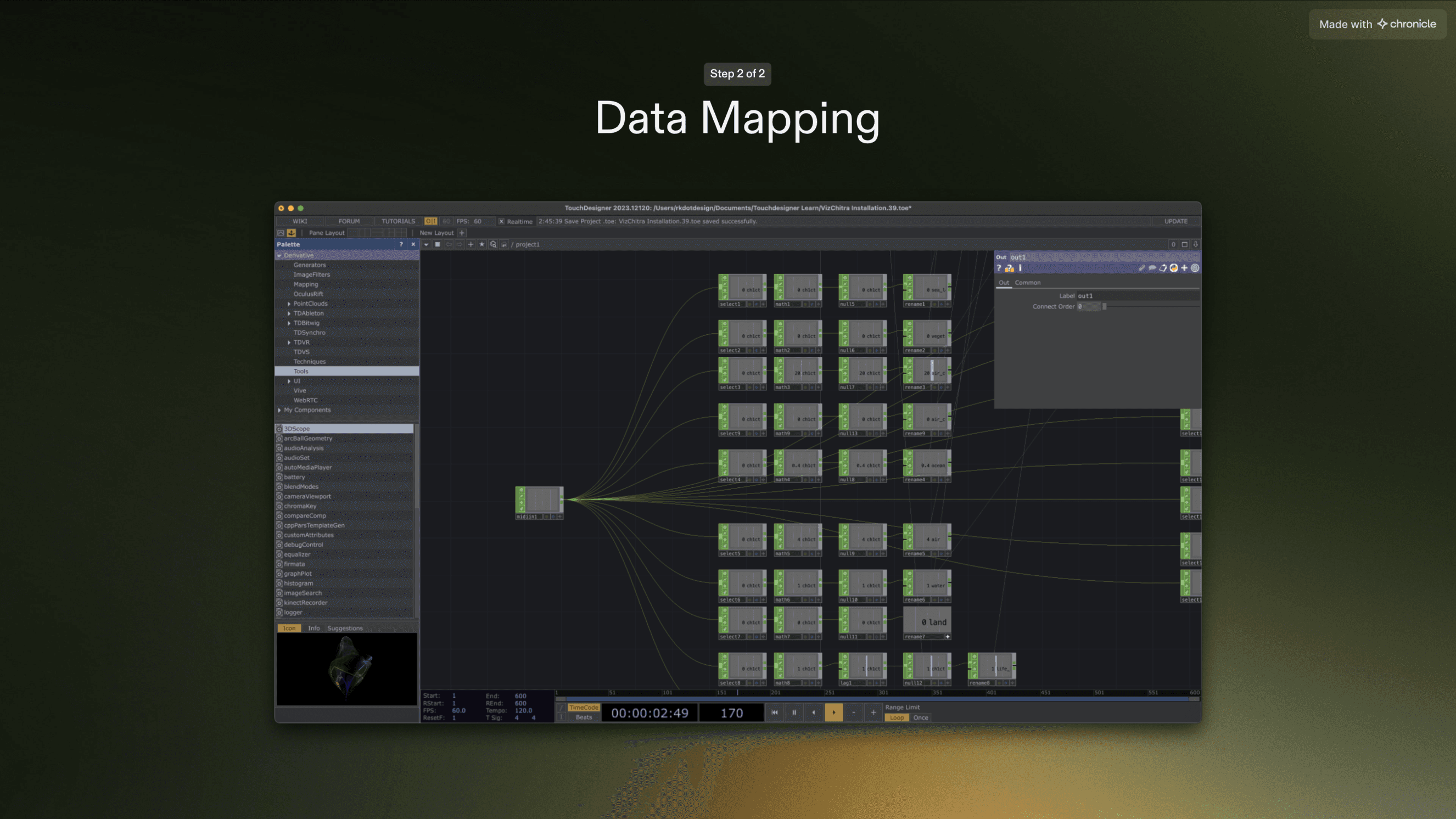
The final step included mapping the values of functions with the parameters. In the MIDI controller, every parameter was assigned a specific knob. So now each of those knobs were mapped to different values. For example:
Rotating knob 1 would effect the blur radius, noise amplitude, and hue value
Rotating knob 2 would effect only noise wave
Once all the parameters were mapped, I also tested out so that there are no conflicting values tied to multiple knobs. This was essential as it could break the setup.
Final Outcome
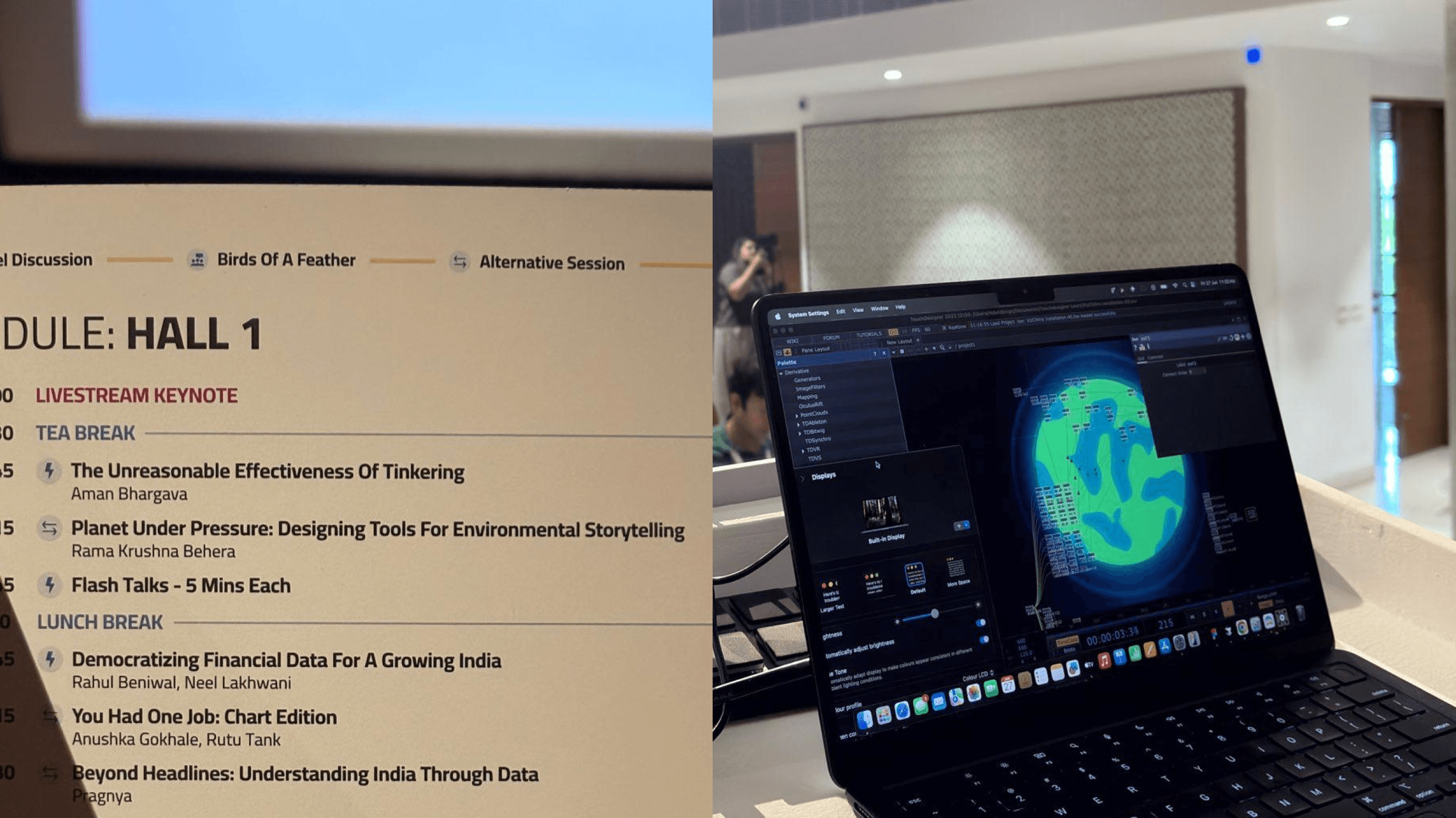
The final installation was setup and presented at VizChitra 2025 in an audience of over 50+ people.
Impact
With over 50+ people attending the session and interacting with the interactive art installation, it sparked 2 insights amongst the viewers:
Data is not merely graph and charts, there are more ways to visualise it
A better way of making audience understand something is through interaction and visualisation, rather then just showing numbers on a paper